By Emma Baum | February 22, 2024
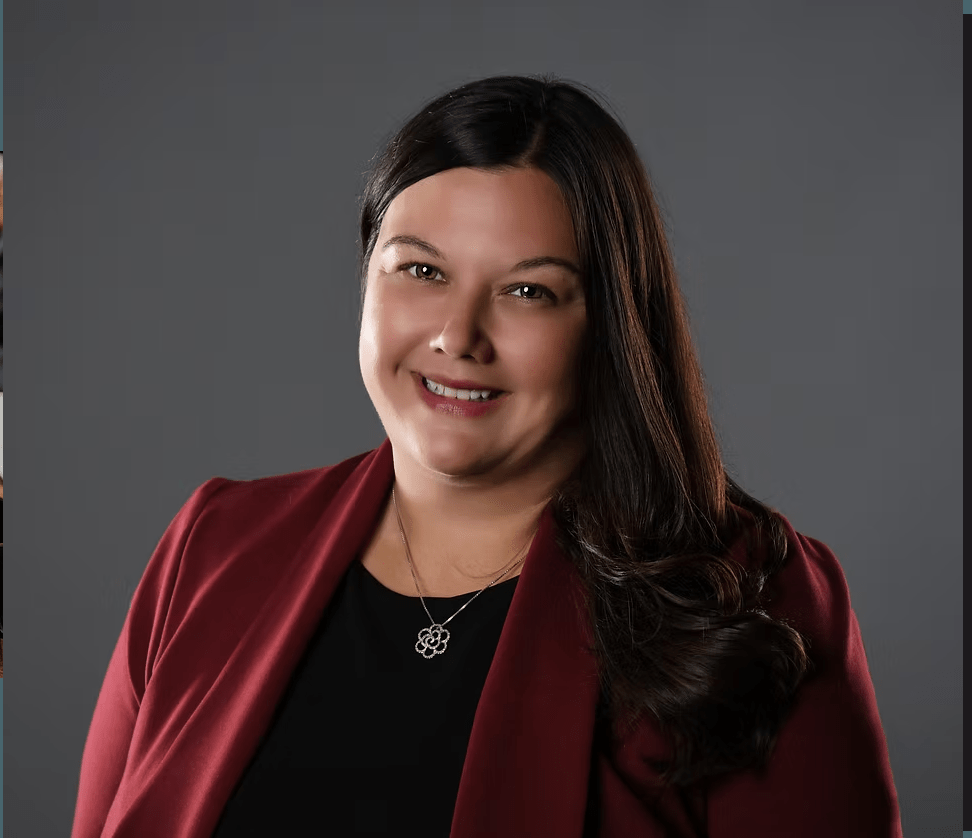
At first glance, Family Health Services of East Central Ohio in Newark, Ohio looks like just another clinic. The walls are covered in birth control pamphlets, folded and stamped with the clinic’s contact information, by volunteers from the local high school seeking National Honor Society hours. In between the plastic chairs lining the waiting room, shelves teem with baskets of condoms, business cards for substance abuse recovery programs, and potted plants. If you take a closer look, though, you’ll find posters proclaiming that “Contraception knows no gender.” Walk behind the front desk and you’ll be welcomed into a hallway of patient rooms, the wood paneled walls and carpeted floors giving the space a distinct feeling of home. It’s all part of an effort by Ashley Washburn and her team to provide “stigma free health care to all.” It is, after all, the clinic’s motto.
“You can walk in our door and you can owe us 50 bucks from the last time you were here,” said Washburn, who has been with the clinic for six years, and served as its executive director for four. “We’re not going to care. We’re still going to see you. We’re going to treat you the best we possibly can. No matter how you identify, no matter what your social economic situation might look like, it doesn’t matter.”
Almost 40% of the patients Family Health Services of East Central Ohio treated were above the 100% Federal Poverty Level (FPL) threshold in 2022, meaning that the patients could be eligible for state-sponsored healthcare based on low income. 20% of the patients treated in that same year were uninsured, which Washburn attributes to people falling between the cracks when they do not qualify for Medicaid but cannot afford their employer’s insurance. Using a combination of client payments, independently raised money, and funding from Title X, a government program for affordable birth control and reproductive healthcare established in 1970, Washburn ensures that no patient is turned away because of an inability to pay.
In recent years though, programs like Title X have caused just as many problems as solutions for clinics like Washburn’s. In 2019, a set of regulation revisions were passed that prohibited clinics that received Title X funding from referring for abortion as a method of family planning.
The new regulations also prohibited medical providers other than advanced practice nurses (APRNs) from counseling patients about pregnancy options. Family Health Services of East Central Ohio only employs two APRNs across four clinic locations in Licking County, Perry County, Muskingum County, and Fairfield County. If no APRN was at a clinic location when a patient got a positive pregnancy test result, the patient could not receive counseling until an APRN arrived.
Bill Roddick, an abortion provider and the medical director at Your Choice Healthcare, the independent abortion clinic in Columbus, Ohio, has faced similar regulations that have restricted his clinic’s ability to provide patients with easy, efficient abortion access. Over twenty targeted restrictions on abortion providers (often referred to as TRAP laws) in Ohio prevent all medical providers except for physicians from performing abortions, including medical abortions, like what is offered at Roddick’s clinic.
For Roddick, the most troublesome TRAP law requires patients to have a minimum of two appointments with a physician, and they must wait 24 hours between appointments, even when there is no medical reason for a delay. This requirement is especially challenging for patients who have traveled to Your Choice Healthcare from out of state. Since a Supreme Court decision in June 2022 ruled that abortion is not conferred in the United States Constitution, the clinic has seen a rise in patients from states such as Kentucky, West Virginia, and Indiana, where abortion is prohibited past six weeks.
“For them, it’s expensive. It’s a hotel room, it’s childcare, it’s travel to and from, it’s days off work,” said Roddick. “And there’s just medically no reason for it. It’s just there to kind of create an additional burden or have a reason for why someone can’t come back.”
The law was particularly devastating for Roddick, the clinic, and its patients in the months after the Supreme Court decision. For 82 days, abortion in Ohio was banned after six weeks. In most pregnancies, it is difficult to receive a positive test, call and make an appointment, and attend two appointments before six weeks. Roddick estimates that during this time, the clinic turned away 85% of its patients because they had exceeded the six week deadline.
“It was a really awful summer,” Roddick said. “ Really just the most difficult thing is knowing that you have the tools and the knowledge to help someone. These meds are five feet away from you at any given time. And you have to say no.”
For Family Health Services of East Central Ohio, shifts in administration had a greater impact on their operations than the 2022 prohibitions on abortion. Access to medications such as Cytocec, a pill that softens the cervix and allows for a better IUD insertion, became difficult, leaving the clinic struggling with an inconsistent supply. Whenever they could, the clinic would stock up on medications such as Cytocec, in addition to Plan B, which, during the Trump administration, pharmacies limited access to.
“CVS, for example, was saying twice a year is the only amount you can get,” Washburn said. “So we stocked up on that and said, you can get as much Plan B as you need to prevent your pregnancy within means. Obviously my APRNs are distributing it properly. But if they need four a year they need four a year. It’s not the end of the world.”
Washburn has also seen the demand for Long-Acting Reversible Contraception (LARC) rise in recent years, which she accredits to public concerns about the future of abortion and contraception access.
For now, the policies and trends in place usually work with Washburn and her team. The Title X Regulation Revisions from 2019 were repealed when President Joe Biden took office in January 2021, which has created an opportunity for open counseling in the clinic. A particular aspect of Title X that Washburn is excited about at the moment is its allowance for minors to be seen and prescribed contraception without a guardian’s permission.
“If mom comes in and says, ‘I want her on the pill,’ but she wants to be on the Depo injection, we have to listen to what the minor wants, which I love,” Washburn said. “I think a lot of providers are doing a great job, but they’re kind of letting mom and dad make all the decisions. So here we really let those individuals empower themselves.”
Washburn has seen concern among her teenage clients that their parents would be mad if they knew they were receiving reproductive healthcare such as contraception. Some patients have mentioned that they worry their parents will track them to the clinic using apps like Life360, which gives live updates about a person’s location. Washburn attributes the potential negative responses of these parents to a general lack of education about and stigma surrounding reproductive healthcare.
In November 2023, Ohio voters were presented with a constitutional amendment on the ballot that would enshrine the right to choose one’s own reproductive healthcare. While the amendment, known as Issue 1, passed with 56.6% of Ohioans voting yes, in Licking County, where the central Family Health Services clinic is and where Roddick lives, the issue only passed by a margin of 2%.
“I felt that in my whole soul,” said Washburn, reflecting on the election results. “Like I said, we’ve had some great supporters. But there’s a lot that just think we’re unnecessary, unfortunately.”
For Roddick, the real test was the special election that occurred in August 2023, three months before Issue 1 was presented to voters. The issue on the ballot was an amendment that would have required a 60% majority for amendments to be made to the Ohio constitution, an increase from the standard 50%.
“I have thought for a while and obviously continue to think at this point that if you put abortion in front of the voters, they will approve it,” Roddick said. “I was very worried that they would have to approve 60%. And that’s impossible. I had no reason to think that 60% of Ohioans can really agree on anything. I was very worried about the August special election. Once that had passed, I had a huge, huge sense of relief. Because I was confident that if we’re talking about a simple majority, we would get it.”
Today, Roddick sees patients up to 10 weeks into their pregnancies, which is the threshold for the medical abortions his clinic performs. Patients who exceed the 10 week deadline are sent to Planned Parenthood’s East Columbus Surgical Center, where they can receive a surgical abortion up to 22 weeks. The fight for reproductive justice isn’t over, though. Both Washburn and Roddick are preparing for the worst in the coming election season, anticipating potential administrative changes that could once again entirely change the way they run their clinics.
There might be a long way to go still, but advocates like Washburn and Roddick are prepared to keep providing their services for as long as there are people who need them.
“There are people in Licking County and people in Columbus who would move mountains to get people care, to offer choices, to be supportive, whatever their decisions are,” said Whitney Crane, Roddick’s partner of over 20 years and a lifelong abortion advocate with a background in public health.
Education, Washburn says, is key. So, until reproductive healthcare is easy and accessible to all, she will keep folding pamphlets. Somehow, the shelves always end up empty eventually.
 Emma Baum
Leave a comment